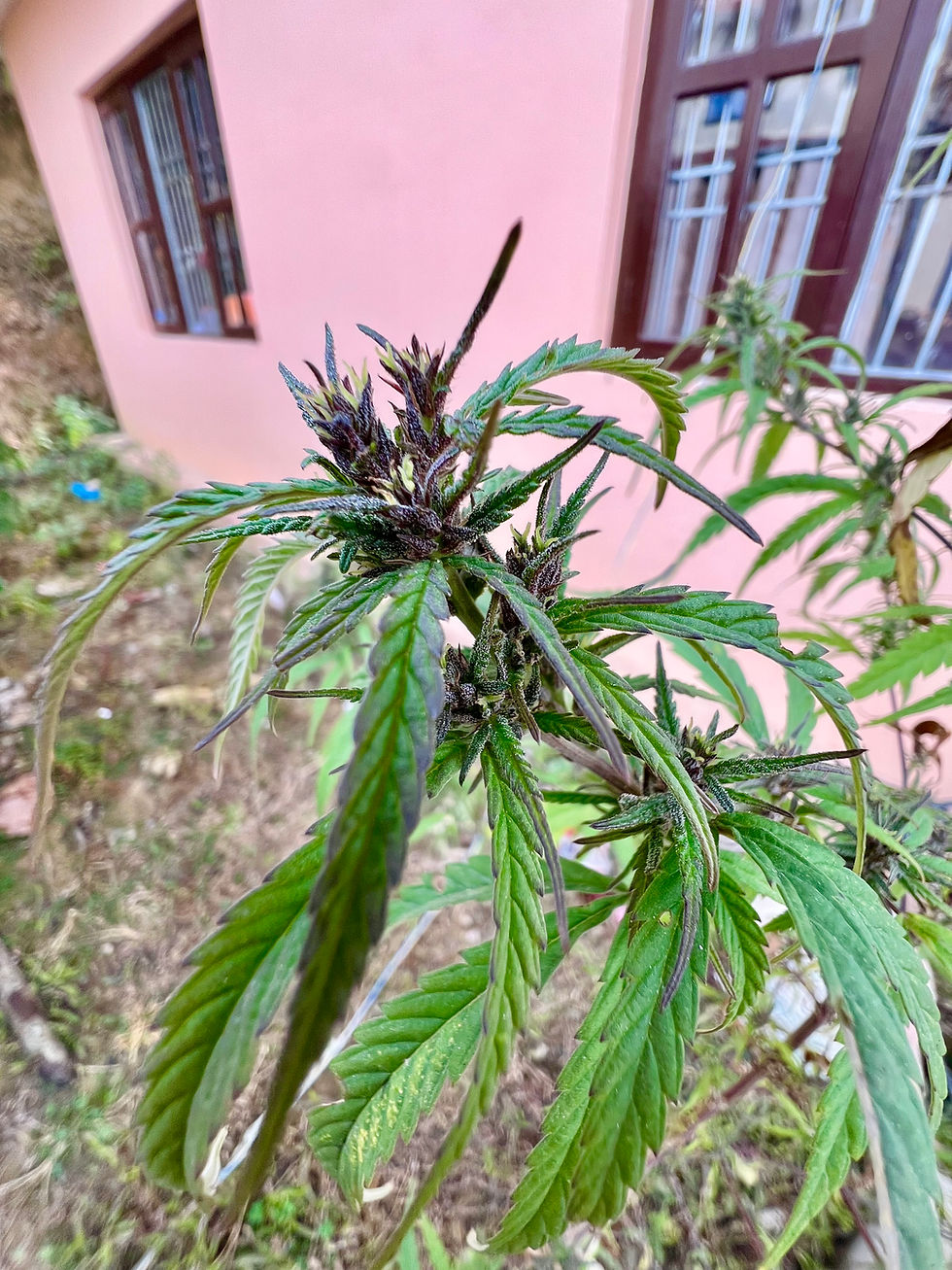
The Okhaldhunga-tested parents came back from the hills with deep purple to near-black coloring, heavy frost reaching all the way out over the sugar leaves, and copper-orange pistils. Expect many of the F1 plants to show that same color as nights cool late in the season, with resin coverage that makes them stand out in any garden.
Origin | hills of Okhaldhunga, eastern Nepal |
What to expect from the F1 generation
Hybrid vigor. Crossing two unrelated gene pools typically produces fast, vigorous, resilient plants that often outgrow both parents.
Variation in the pack. The landrace side brings real genetic diversity, so expect a range of phenotypes, from compact hybrid-leaning plants to taller, airy Nepalese-leaning ones. That makes it an ideal pack for pheno-hunting and selection.
Structure. We expect most plants to fall between the parents: more stretch and height than the hybrid, with better branching and more manageable flowering than a pure Himalayan sativa.
Resin and aroma. These traits come from both sides: the hybrid's resin production, layered with the spice, incense, and wood terpenes typical of Himalayan sativas.
Adaptability. The landrace parent has been shaped by generations of mountain seasons, and that hardiness is part of what this cross carries forward.
Best for: commercial growers looking for vigor with a story, breeders hunting keeper phenotypes, and anyone who wants a piece of the Himalayan genome in their garden.
Every pack carries forward the work of the families who kept these landraces alive. When you grow them, you become part of that lineage.
Sold as souvenirs and for genetic preservation where legal.
Hybrids x Okhaldhunga, Nepalese
The Okhaldhunga-tested parents came back from the hills with deep purple to near-black coloring, heavy frost reaching all the way out over the sugar leaves, and copper-orange pistils. Expect many of the F1 plants to show that same color as nights cool late in the season, with resin coverage that makes them stand out in any garden.
Our Guardian of the Landrace Bureau photoperiod hybrids were bred for commercial cultivation. We took them into the hills of Okhaldhunga, in eastern Nepal, to see how they would handle real Himalayan conditions. They thrived. So we did what the farmers of those hills have done for generations: we crossed our strongest performers with the region's own landrace sativas, choosing parents in the field for vigor, resin, and how well each plant had adapted to the mountains.
These are the first-generation (F1) crosses, joining modern commercial structure with Nepalese heirloom genetics.