7 or 14 Regular Seeds
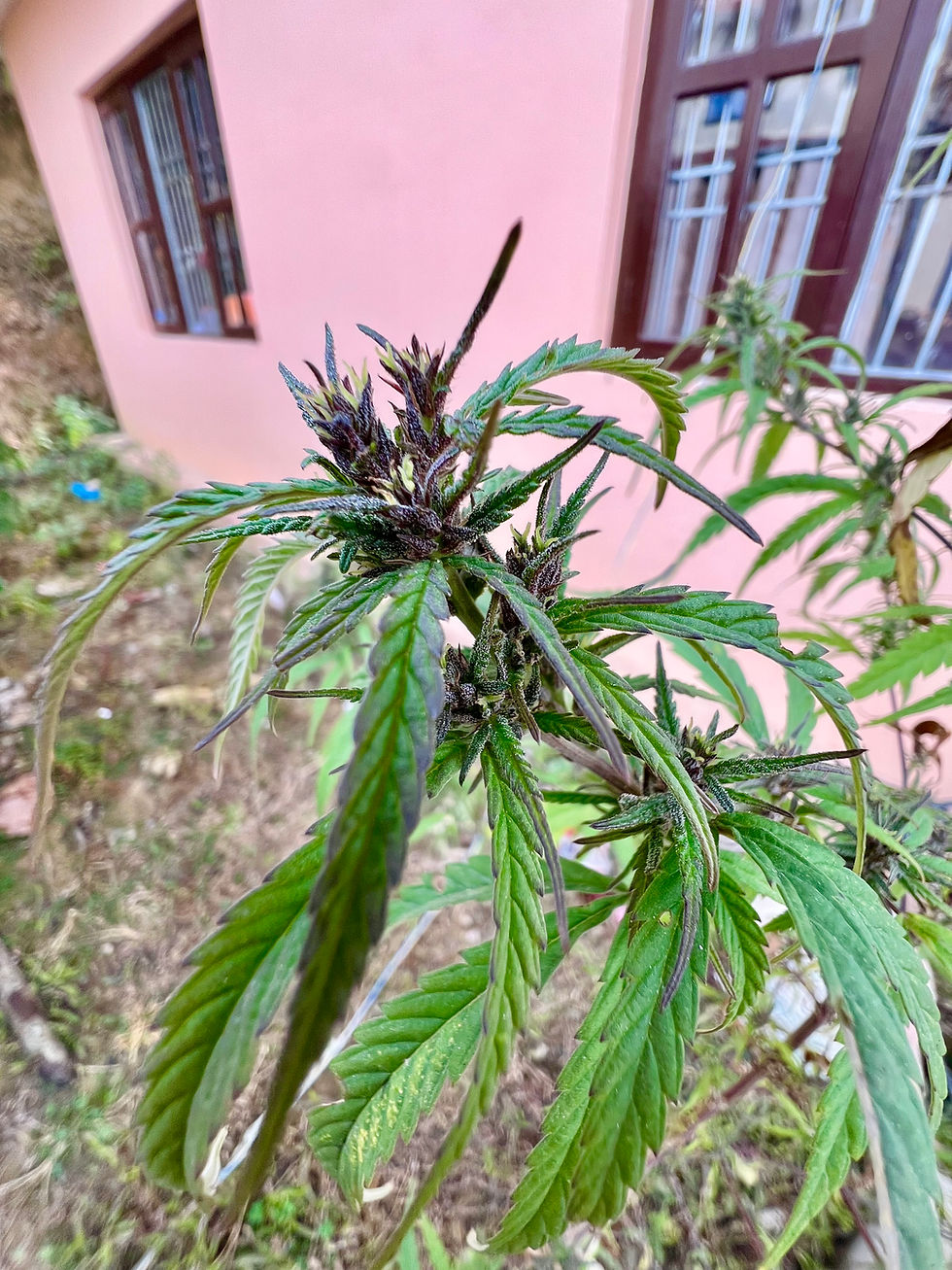
This is Halesi Haze, from the hills of Halesi in Khotang district, eastern Nepal. We walked to the temples, then around the village in the hills overlooking the sacred caves. There we found three plants with very distinct structures, terpene profiles, and quality — all really good. These seeds come from that selection.
Halesi is home to the Halesi Mahadev cave temple, a pilgrimage place of Shiva. The same caves are known to Tibetan Buddhists as Maratika, where Padmasambhava, Guru Rinpoche, and his consort Mandarava practiced the long-life teachings of Amitayus and, the texts say, attained deathless life. Hindus, Buddhists, and the Kirat people of this region have all held these caves as sacred.
A place given a sacred name is a place that has been kept. We went into the two caves, then walked the village above them, and these three plants were the ones we kept. Because the seeds come from three distinct plants, expect variation across three phenotypes — in structure, aroma, and the way each one carries itself.
What to expect from Halesi Haze
Phenotypes. Seeds may express any of the three distinct plants found in the village above the caves, each with its own structure, terpene profile, and quality.
Appearance. One of the three is a tall, airy, narrow-leaf expression, growing beside a village house in the hills. The other two carry their own, clearly different structures.
Flowering. 7–8 months.
Aroma. Expect licorice, candy, herbal, and lemon notes, with variation across the three phenotypes.
Best for: growers and preservationists who want a Khotang district landrace from the hills around Halesi's sacred caves, with expected licorice, candy, herbal, and lemon notes, and who value the variation that comes from three distinct, high-quality plants.
Nepalese landrace from Halesi, in the Khotang district of eastern Nepal.
Sold as souvenirs and for genetic preservation where legal.