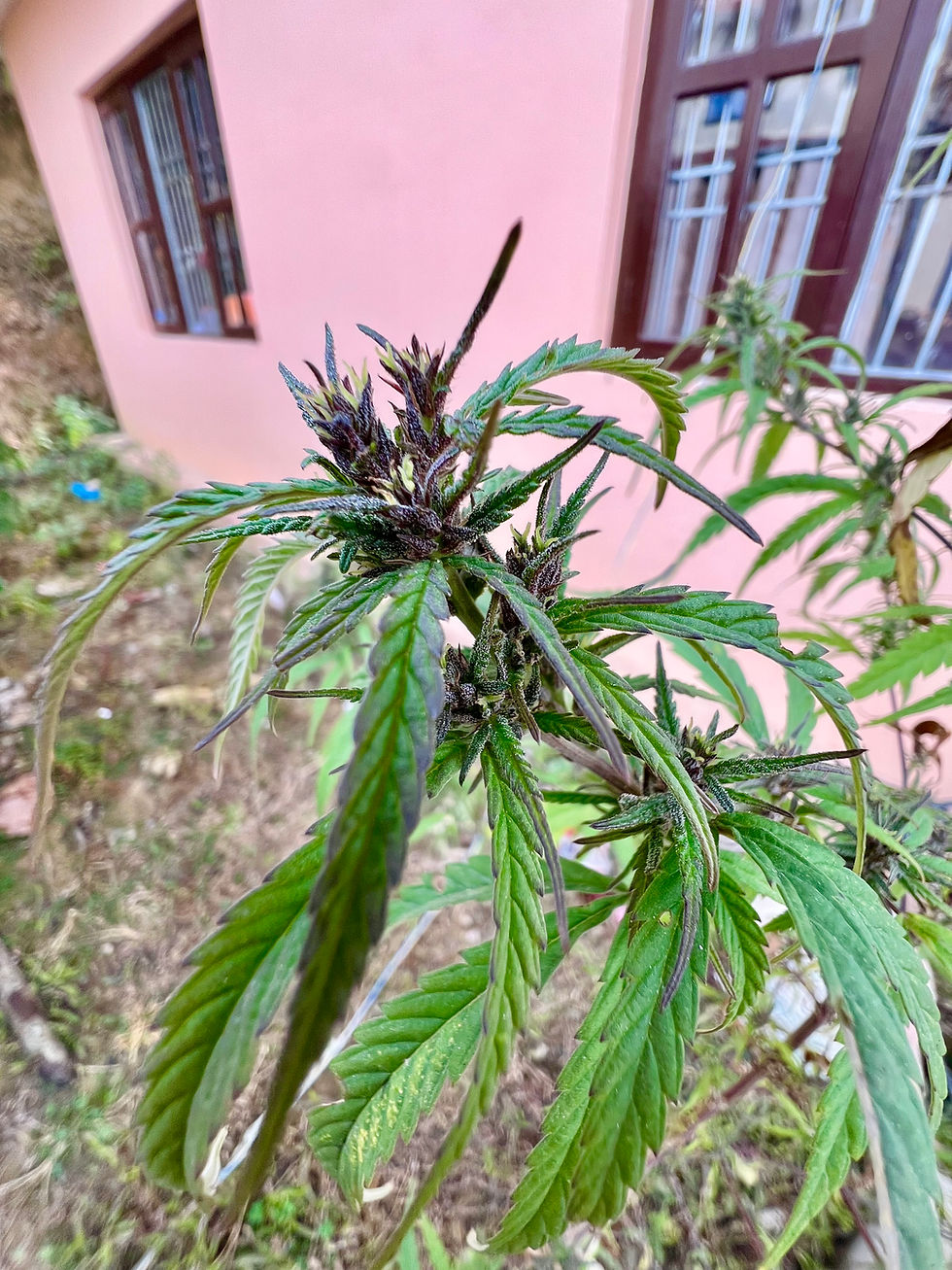
12 Regular Seeds
This is a garden in Okhaldhunga, Koshi Province, at 8,593 feet, one of the countless gardens of giants we found on our pilgrimage of the Himalayan cannabis genome. Here the Nepali sativas tower over the banana trees: a dense stand of tall, narrow-leaf plants rising behind a bamboo rail fence into a clear mountain sky.
Pack size | 12 Regular Seeds |
Sex | Regular |
Flowering time | 6-8 months |
Origin | Okhaldhunga, Koshi Province, Nepal |
Altitude | 8,593 feet |
Farm / farmer | family heirloom garden in Okhaldhunga; the farmer who keeps this garden, and his parents before him |
What to expect from the Garden of Giants
Generations of selection. Chosen year after year for resin, structure and yield, so this population carries a farmer's eye for flower, not just the will to survive.
Size. True Himalayan sativas that tower over the banana trees in their home garden. Outdoors, plan for real height and give them room and strong support.
Flowering: 6–8 months. A long-season Himalayan sativa that builds through the monsoon and finishes as the days turn cool and dry, so plan for a late harvest.
Structure. Tall, many-branched plants with long, narrow-leaf spears reaching in every direction, an open frame that lets mountain air move through the canopy.
Aroma and terpenes. Narrow-leaf Himalayan sativas tend toward a lifted, bright bouquet: sweet citrus and lemon zest, temple incense and old wood, a peppery spice, and green herbal notes over a grounded, earthy base. Each plant in a landrace population will tell it a little differently.
Mountain-grown. At 8,593 feet these plants grow through cool nights, strong sun and lean hillside soil, and that hardiness is part of what every seed carries.
Variation in the pack. As a true landrace population, expect a range of phenotypes. That makes it an ideal pack for pheno-hunting and selection, the same work this family has done for decades.
Best for: growers who want a true Himalayan heirloom, breeders and preservationists who value decades of farmer selection, pheno-hunters looking for resin and structure, and anyone who wants a piece of the Himalayan genome in their garden.
Every pack carries forward the work of the families who kept these landraces alive. When you grow them, you become part of that lineage.
Sold as souvenirs and for genetic preservation where legal.
Okhaldhunga Family Heirloom
This is a garden in Okhaldhunga, Koshi Province, at 8,593 feet, one of the countless gardens of giants we found on our pilgrimage of the Himalayan cannabis genome. Here the Nepali sativas tower over the banana trees: a dense stand of tall, narrow-leaf plants rising behind a bamboo rail fence into a clear mountain sky.
The farmer who keeps this garden has been selecting this variety for flower for many decades. Every season the best plants are chosen for resin, structure and yield, and only those carry their seed into the next year. His parents made their selections the same way before him. That is what an heirloom really is. It isn't something bought or sold. It is a living record of what a family valued, kept one generation after the other.
The province takes its name from the Koshi river, which in the old stories is Kaushiki, sister of the sage Vishvamitra, who became a river. In the Vedic idea of bija, the seed holds the whole of what came before it. Every seed in this pack holds the choices of the hands that kept this garden, season after season. When you sow them, you are planting someone's family lineage record.
These are Nepalese landrace seeds from a family heirloom garden in Okhaldhunga, carrying decades of selection forward.