12 Regular Seeds
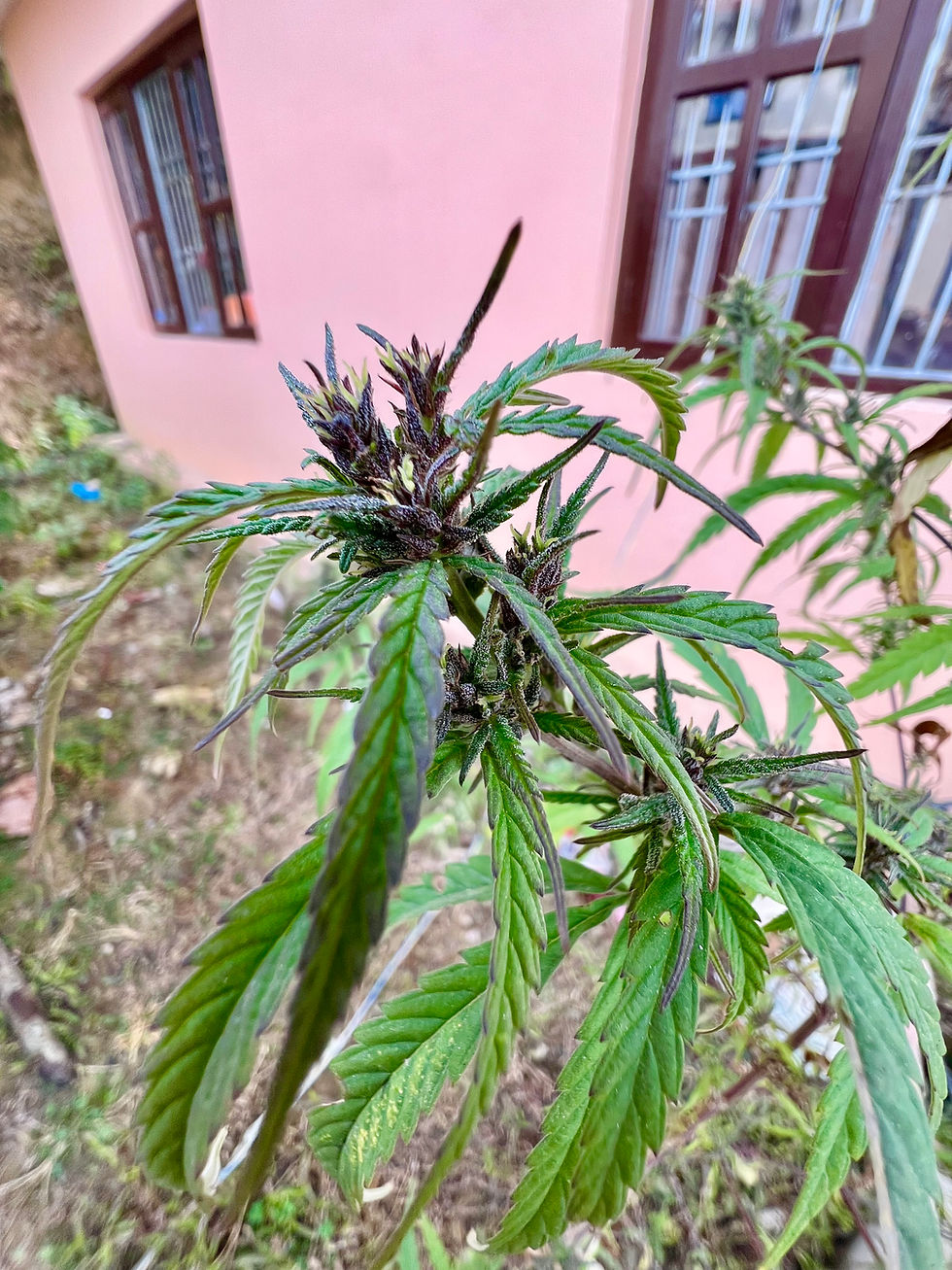
This is the Dakshinkali Pearl pheno, found near Pharping in the Kathmandu Valley, just south of Kathmandu and close to the Dakshinkali temple. On a strain hunt through garden after garden, most plants looked the same, until one quietly stood apart: purple running through the veins, huge neon pistils, and pearls of resin. It was hidden in a garden behind an apartment complex.
Dakshinkali is one of the Kathmandu Valley's principal temples of Kali, the fierce form of the Divine Mother. Just beside it, Pharping — known in the Nyingma tradition as Yangleshö — is among the most sacred places for both Buddhists and Shaivas. This is where Padmasambhava, Guru Rinpoche, is said to have meditated in the caves above the valley before carrying the Vajrayana teachings into Tibet. Hindus revere the same ground at the Shesh Narayan temple, a place of Vishnu. Two traditions share one valley.
In the old herbal traditions, a plant that marks itself is a plant asking to be kept. The Nyingma tradition of this same valley speaks of terma, treasures hidden in the earth and in the mind, revealed only when the time and the finder are ready. A strain hunt can feel a lot like that. This is the plant we're keeping, and these seeds carry her story forward.
What to expect from Dakshinkali Pearl
Appearance. Purple running through the veins, huge neon pistils, and a narrow-leaf structure with purple-red stems.
Resin. Pearls of resin that catch the light when the plant moves, with heavy trichome coverage on the calyxes and sugar leaves.
Aroma. Expect onion, gas, berry, and earthy floral notes on the nose.
Flowering Time: 6 - 7 Months
Best for: growers and preservationists who want a distinctive Kathmandu Valley landrace pheno, marked by purple veins, heavy resin, and a sharp, complex aroma.
Nepalese landrace from the Dakshinkali and Pharping area of the Kathmandu Valley.
Sold as souvenirs and for genetic preservation where legal.