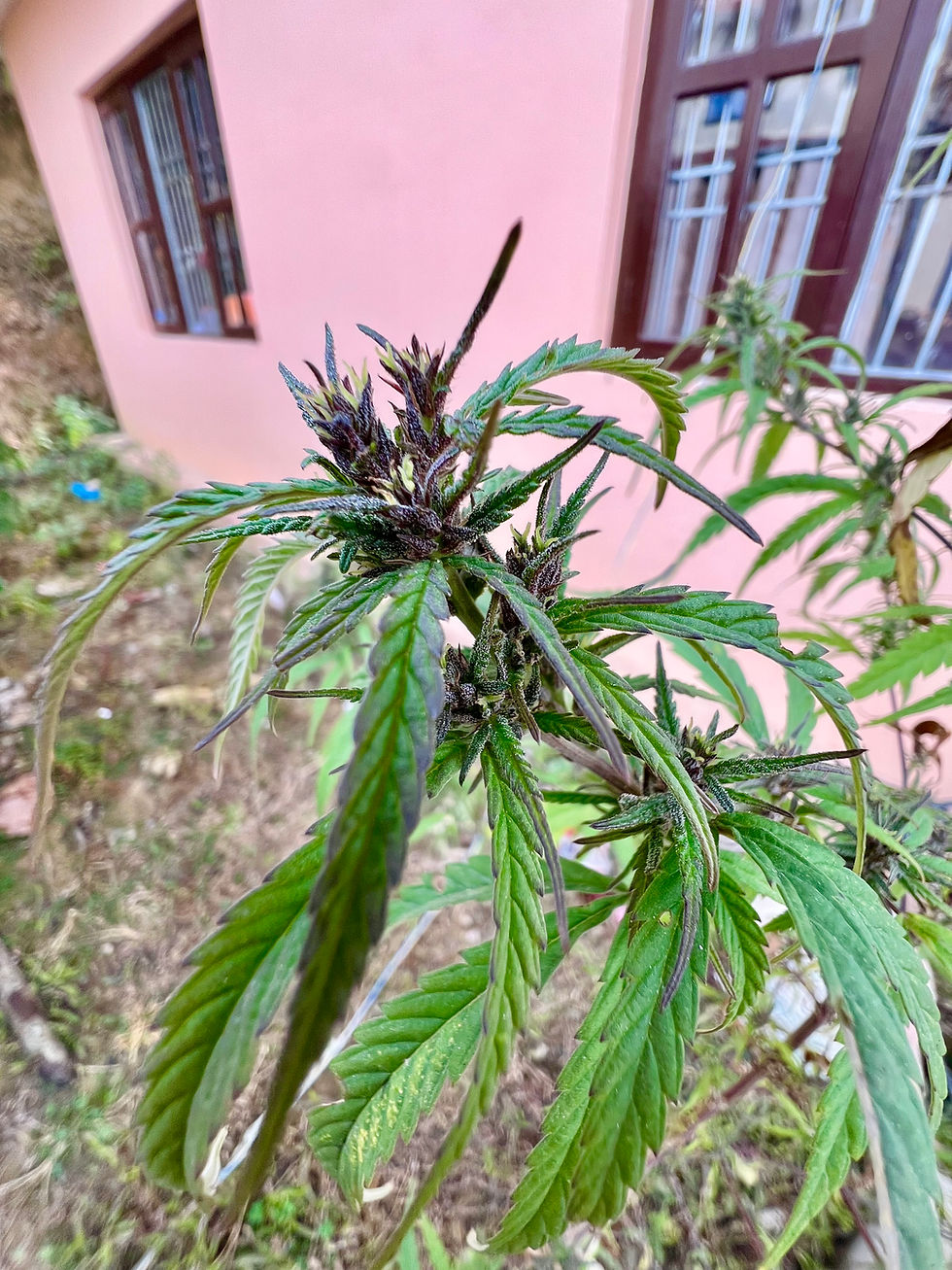
These are the biggest plants we found in Nepal. In the Suntakhan region, the Tarevir landraces were reaching around 25 feet in the field, towering over everything around them. Inside that size lives a remarkable spread of expressions: lemon, lime, pepper, mango, pineapple, and pine, myrcene-heavy plants, purple plants, skunk, and deep earthy types.
Height | around 25 feet in the field |
Origin | Suntakhan region, Nepal |
What to expect from the Tarevir
Size. The tallest plants we found anywhere in Nepal, reaching around 25 feet in the field. Give them room to stretch.
Terpene range. Lemon, lime, pepper, mango, pineapple, pine, myrcene, skunk, and earthy expressions all appear in the population, along with purple plants.
Resin. Selected for dry-sift and flower production, with many phenotypes ideal for hand-rubbed charas.
Variation in the pack. As a true landrace population, expect a wide range of phenotypes. That makes it an ideal pack for pheno-hunting and selection.
Adaptability. These plants have been shaped by generations of mountain seasons, and that hardiness is part of what every seed carries.
Best for: growers with room for true giants, hash makers chasing dry-sift and charas resin, breeders hunting keeper phenotypes, and anyone who wants a piece of the Himalayan genome in their garden.
Every pack carries forward the work of the families who kept these landraces alive. When you grow them, you become part of that lineage.
Sold as souvenirs and for genetic preservation where legal.
28ft Tarevir, Suntakhan Nepalese Landrace
These are the biggest plants we found in Nepal. In the Suntakhan region, the Tarevir landraces were reaching around 25 feet in the field, towering over everything around them. Inside that size lives a remarkable spread of expressions: lemon, lime, pepper, mango, pineapple, and pine, myrcene-heavy plants, purple plants, skunk, and deep earthy types.
Across the Himalaya, cannabis has never been only a crop. It is bound up with Shiva, the Adiyogi, the first yogi of the mountains, and on Maha Shivaratri sadhus gather at Pashupatinath in Kathmandu with hand-rubbed charas as part of their devotion. The farmers of these hills keep their plants by saving seed by hand, season after season, and the Tarevir has been selected for both dry-sift and flower production, with many phenotypes perfectly suited to charas.
These are Nepalese landrace seeds from the Suntakhan region, carrying the heirloom genetics of the Himalaya forward.